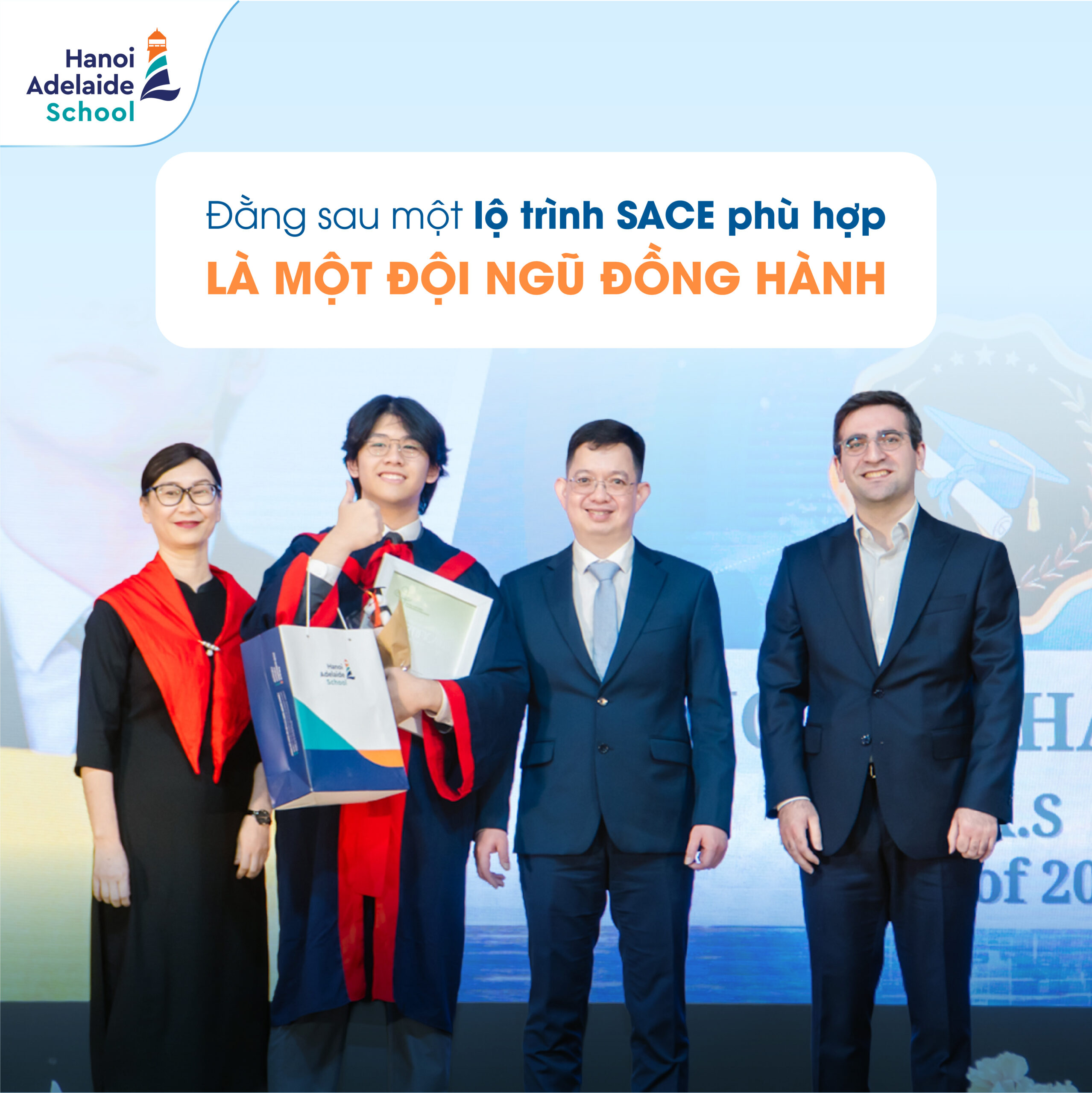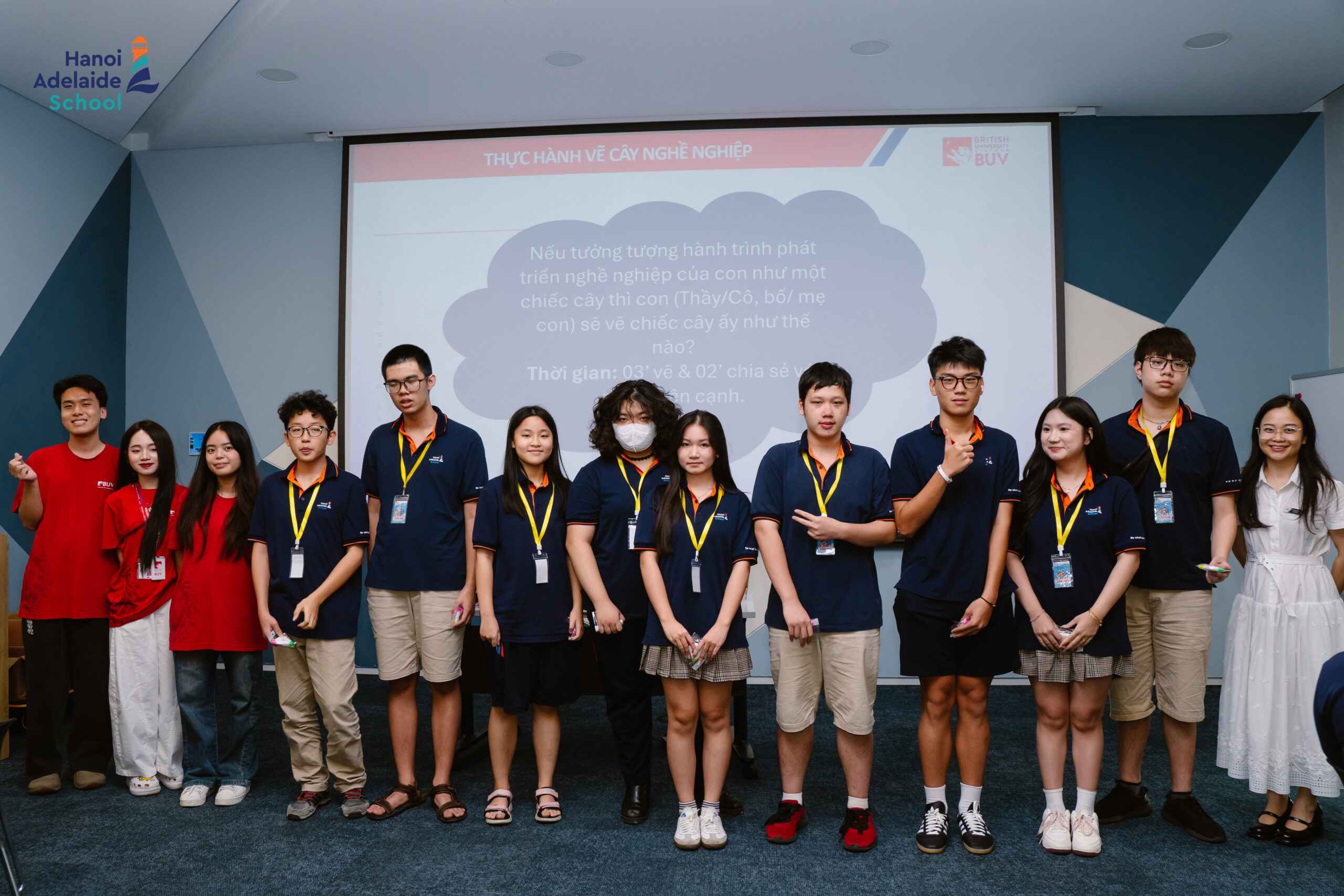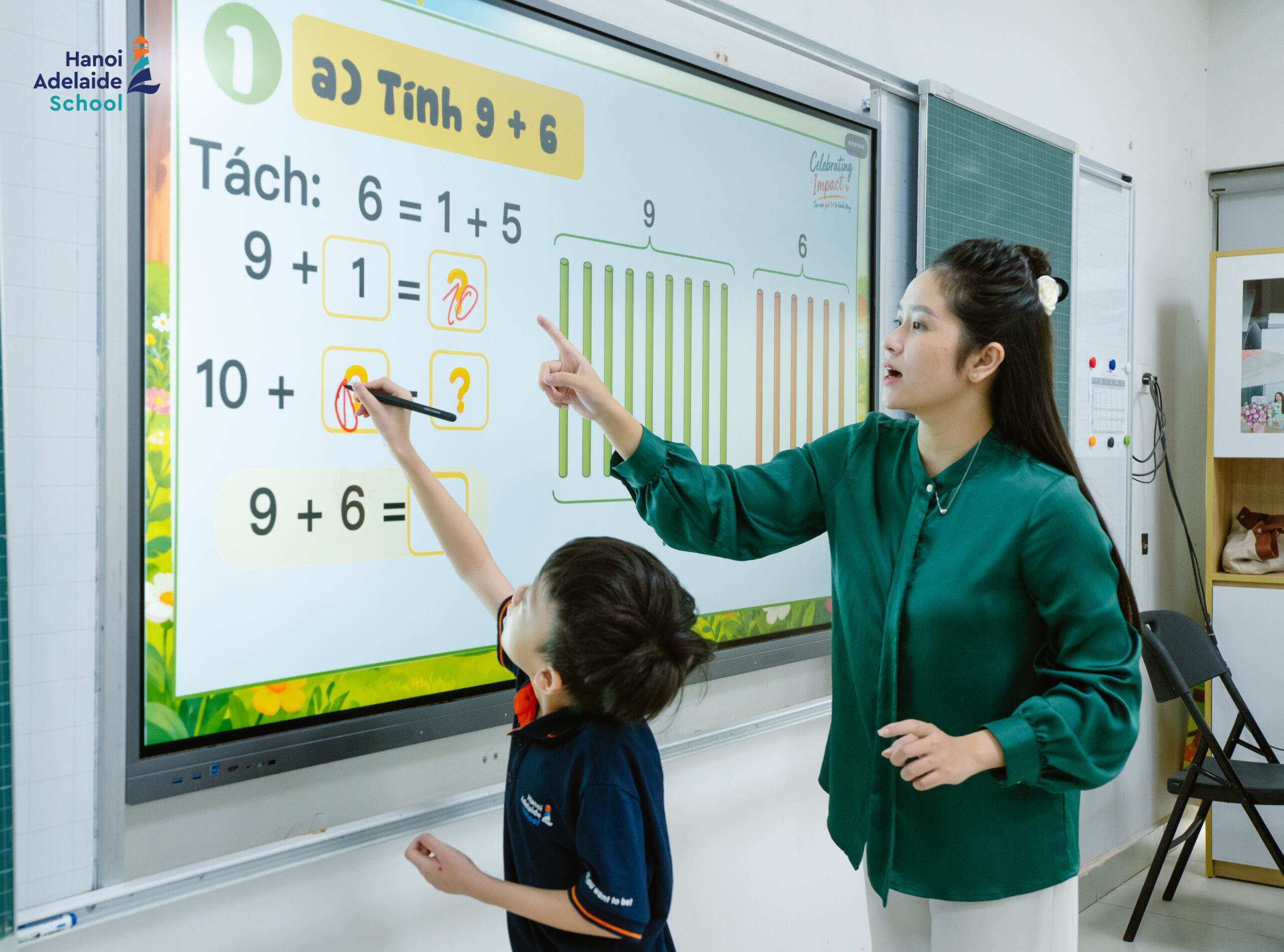


Within the Vietnamese–Australian High School Dual Program at Hanoi Adelaide School, the Mentor Program is more than just after-class academic support. It is a continuous journey of guidance—where students gradually learn how to study, how to think, and how to take ownership of their own learning path.
Accompanying students on this journey is Ms. Do Thi Yen Hoai, a Business Innovation teacher and mentor in the program, with a strong international academic background. Having studied the ALF program at Kings Brighton and earned a Bachelor’s degree in Digital Marketing & Advertising from the University of Northampton, along with a CELTA certification and an IELTS score of 8.5, she brings a modern educational perspective that emphasizes practical application and independent thinking.
Her learning experiences in the UK have shaped her teaching philosophy: not stopping at simply “solving problems,” but focusing on helping students understand the core of each issue and apply their knowledge in real-life contexts. For Ms. Yen Hoai, the role of a mentor is not to provide answers, but to guide students in finding their own path to solutions.
When the Challenge Is Not Knowledge, but How to Use It
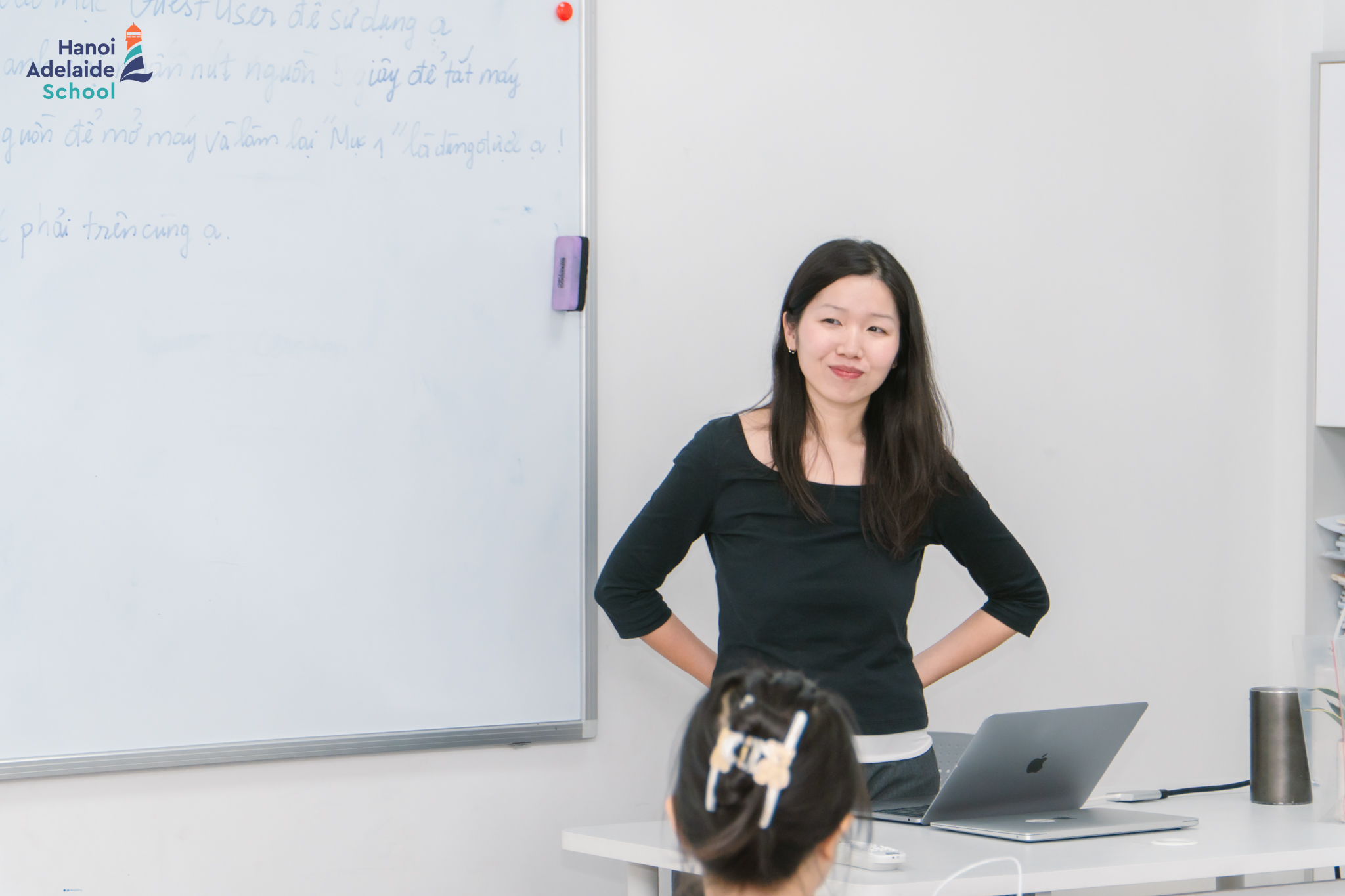
In working closely with students—especially on major assessments—Ms. Yen Hoai has observed that many students do not lack knowledge, but struggle with applying it effectively. “What matters is not what you remember, but how you use your knowledge,” she shares. From there, she guides students through a clear process: understanding the core concept – applying it – analyzing – and forming evaluations. Once students grasp this process, their work becomes more in-depth and their arguments more structured and coherent.
Her past study-abroad experience also helped her realize that this is a transition most students go through. “When I was studying, it also took me time to adapt to this way of working. It’s not about memorization—you need deep understanding and the ability to develop your ideas.”
In the SACE program, students are not only expected to “get the right answer,” but to understand how to approach a problem. This is why having mentors and teachers alongside them plays a crucial role in helping students become more proactive in shaping their responses.
For example, in Economics, many students may understand concepts such as price elasticity of demand, yet feel uncertain when faced with real-world questions—such as analyzing the impact of increased taxes on the tobacco market. With the support of a mentor, students learn how to translate theoretical knowledge into specific contexts, enabling them to analyze and present their arguments more effectively.
More importantly, students are not just completing individual tasks—they are gradually building their own learning methods. Once they understand the approach, they can confidently apply it to future assignments, rather than relying on step-by-step guidance from mentors and teachers.
After-Class Sessions – Where Progress Becomes Most Visible

In particular, after-school mentor sessions create a personalized space where students can address challenges promptly and build structured study habits. Beyond simply completing assignments, students gradually become more confident, proactive, and willing to express their own perspectives.
Within 1 to 1.5 hours, students have the opportunity to clarify what they did not fully understand in class, review key concepts, or receive direct support for upcoming assignments and projects. Instead of struggling on their own with accumulated difficulties, they can resolve each issue as it arises with the guidance of their mentor.
Close progress tracking also helps students develop effective study planning habits. Rather than leaving tasks until the last minute, they learn to break work into manageable steps, steadily refine their ideas, and improve the quality of their work.
“One of the most valuable outcomes for students is not an immediate increase in scores, but a transformation in how they learn and absorb knowledge,” Ms. Hoai shares.
These changes may seem small, but they are clear signs of sustainable progress. When students truly understand the material, gain confidence, and feel comfortable expressing their thoughts, learning is no longer a source of pressure—it becomes a far more meaningful journey.
Mentor Program – When Students No Longer Learn Alone

Within the Dual Program at Hanoi Adelaide School, the combination of teachers and mentors creates a comprehensive support system for students. While teachers ensure strong academic foundations and subject guidance, mentors provide close support, guidance, and help students overcome challenges throughout their project work. As a result, students not only learn correctly but also receive timely support tailored to their real learning difficulties.
The greatest value students gain is not just academic results, but the ability to learn independently and think critically. They gradually understand how to approach problems, ask the right questions, and find appropriate solutions.
“Sometimes, what matters most is not having the answer, but knowing how to find it,” Ms. Yen Hoai shares.
And when students can confidently continue their learning journey with clarity and initiative, that is when the Mentor Program truly fulfills its purpose—not only helping them learn better, but helping them learn the right way, in a more sustainable and meaningful manner.
Hanoi Adelaide School
Ngôi trường tiên phong trong giáo dục phát triển năng lực