

The Australian education system uses a multi-layered approach to student assessment, combining standardized testing, ongoing school-based evaluation, and a national ranking system for university admissions. This approach aims to provide a comprehensive view of a student’s academic ability, rather than relying on a single exam.
In practice, students in Australia are assessed through a variety of methods throughout their learning journey. Instead of depending on one final test, evaluation typically integrates national standardized assessments, continuous in-school performance, and university entrance rankings.

National Standardized Assessment – NAPLAN
At the national level, Australian students sit the NAPLAN (National Assessment Program – Literacy and Numeracy) in Years 3, 5, 7, and 9.

This assessment focuses on foundational skills, including:
- Reading
- Writing
- Language conventions (spelling and grammar)
- Numeracy
NAPLAN results help parents, teachers, and the education system track students’ academic progress against national benchmarks, while also supporting schools in adjusting teaching strategies when needed.
Ongoing School-based Assessment
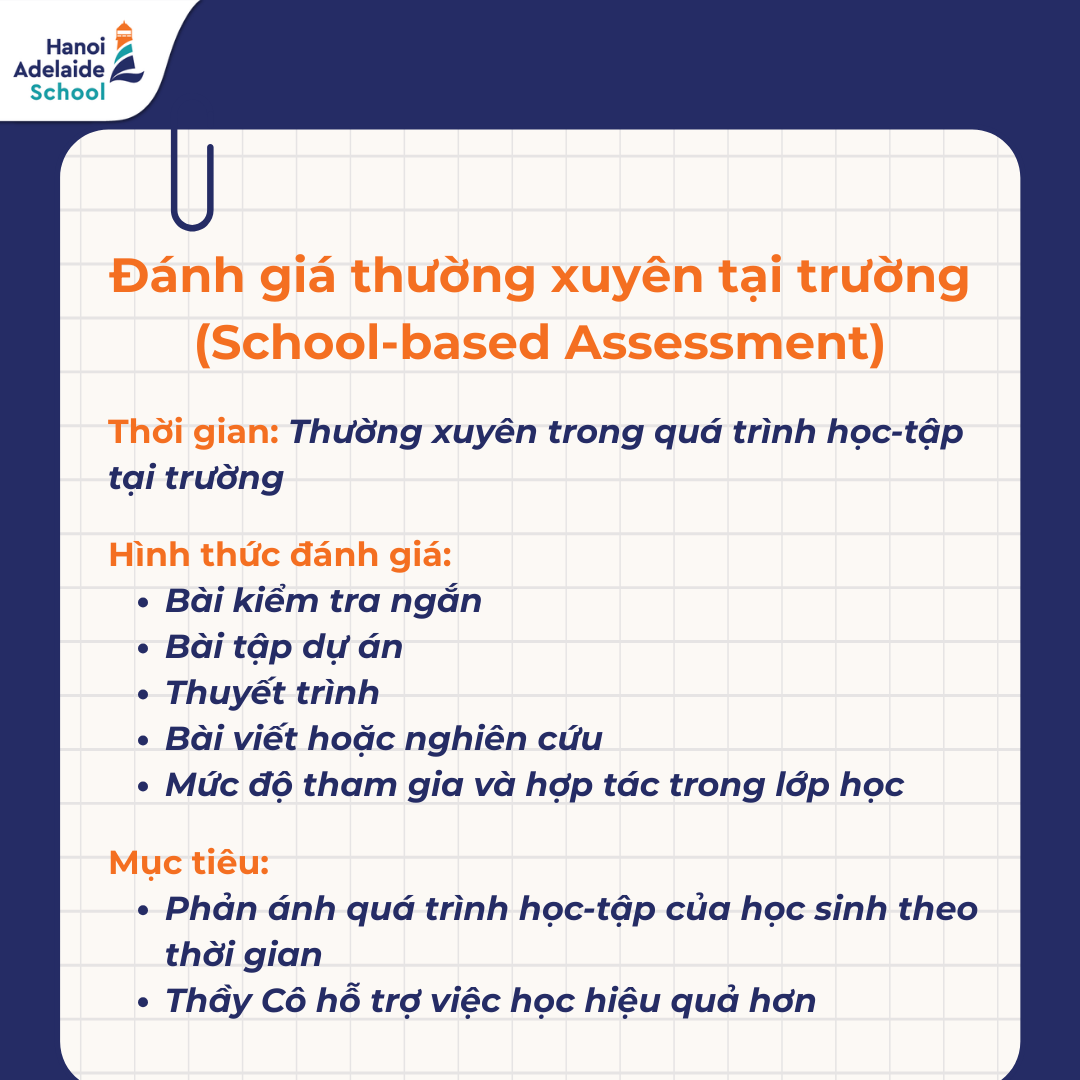
In addition to standardized testing, students in Australia are continuously assessed throughout their time at school. Teachers monitor progress through various methods such as:
- Quizzes and short tests
- Project-based assignments
- Presentations
- Essays and research tasks
- Class participation and collaboration
This form of assessment reflects students’ learning progress over time and provides timely feedback to support their development.
University Admission Ranking – ATAR
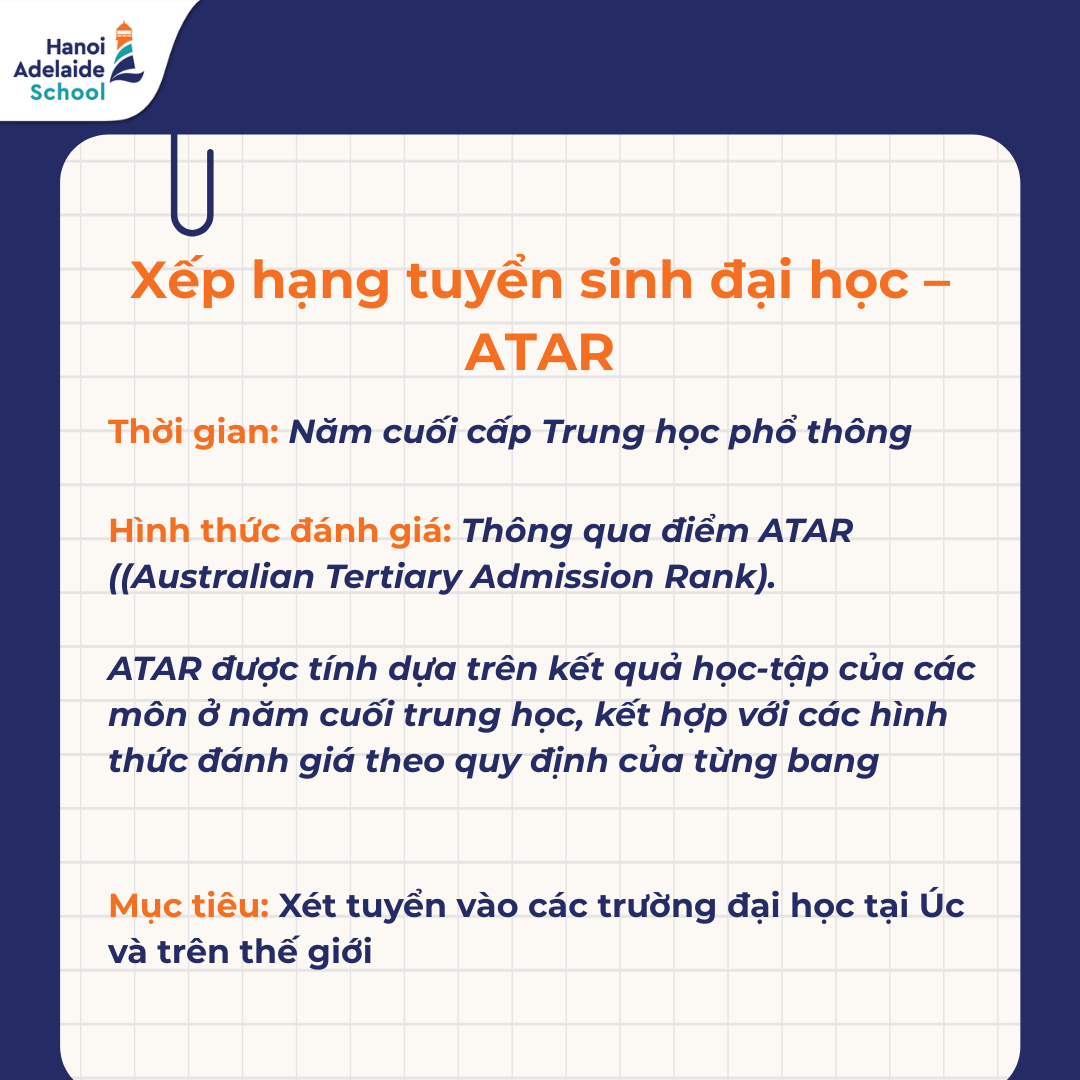
In their final year of secondary school, students receive an ATAR (Australian Tertiary Admission Rank), which is widely used for university admissions in Australia.
Unlike traditional scores, ATAR is a percentile ranking that shows a student’s position relative to their peers. It ranges from 0.00 to 99.95.
For example, an ATAR of 90 indicates that a student is in the top 10% of their cohort. ATAR is calculated based on final-year subject results, combined with state-specific assessment requirements.
Thanks to this multi-layered system, Australian education aims to assess students holistically while ensuring a transparent and reliable foundation for university admissions.
————————
The Vietnam–Australia Dual Diploma Programme (Global pathway) at Hanoi Adelaide School is an international high school programme developed in alignment with the South Australian curriculum. It is delivered entirely in English and integrated with the Vietnamese national curriculum.
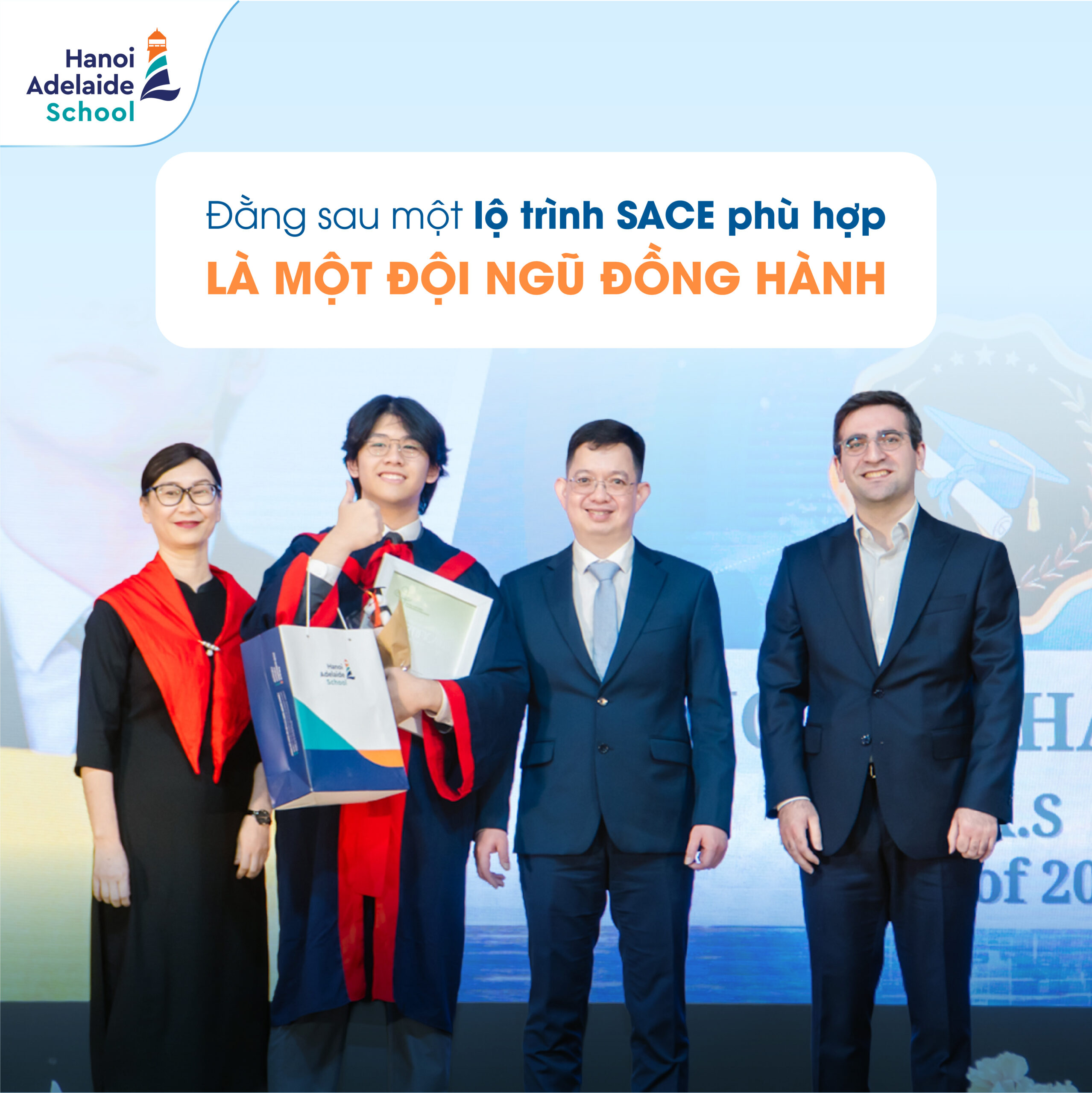
Graduates receive both the Vietnamese High School Diploma and the international SACE qualification, along with an ATAR score—an important academic metric used for university admissions in Australia and many countries worldwide.
The programme is designed to support holistic student development: strong academic knowledge, English proficiency, critical thinking and independent research skills, time management, project-based learning, and adaptability in international learning environments. In addition to core subjects such as Mathematics, English, and Economics, students can choose from specialized subjects like Media, Creative Arts, Business, and Research Studies to build a personalized academic pathway aligned with their university goals.
One of the key advantages of the SACE programme is its clear and flexible university pathway. With an ATAR score, students can apply directly to hundreds of universities in Australia, as well as institutions in the UK, the US, Canada, Singapore, New Zealand, and across Asia—without the need for a foundation year. Completing both programmes in Vietnam also helps families significantly reduce the cost compared to studying abroad at an earlier stage.
SACE is the official secondary education programme of South Australia, governed, quality-assured, and certified by the SACE Board. Each year, tens of thousands of students worldwide undertake this programme, and more than 150 universities in Australia and internationally use ATAR as a formal admission criterion.
At Hanoi Adelaide School, previous SACE cohorts have achieved outstanding results, including high ATAR scores, scholarships ranging from 20% to 50%, and admissions to prestigious universities such as the University of Technology Sydney, the University of Adelaide, the University of Sydney, RMIT University, Deakin University, and Monash University, along with many other institutions in Vietnam and abroad.
Hanoi Adelaide School
Pioneering Competency-Based Education in Vietnam