
Transitioning from high school to an international university is not just a change in curriculum—it also involves a shift in learning approaches, time management, and students’ independence.
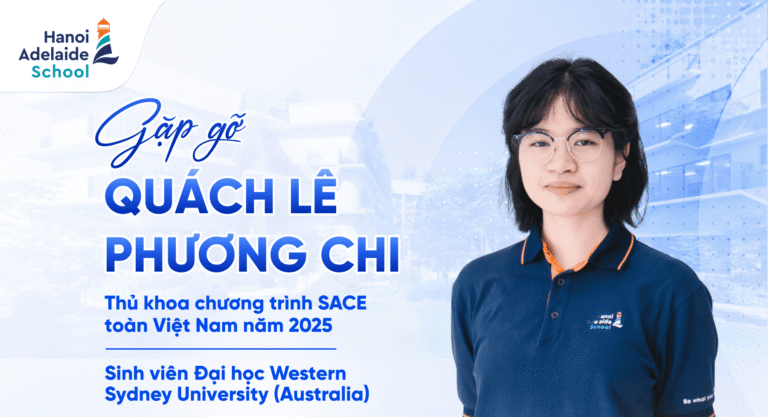
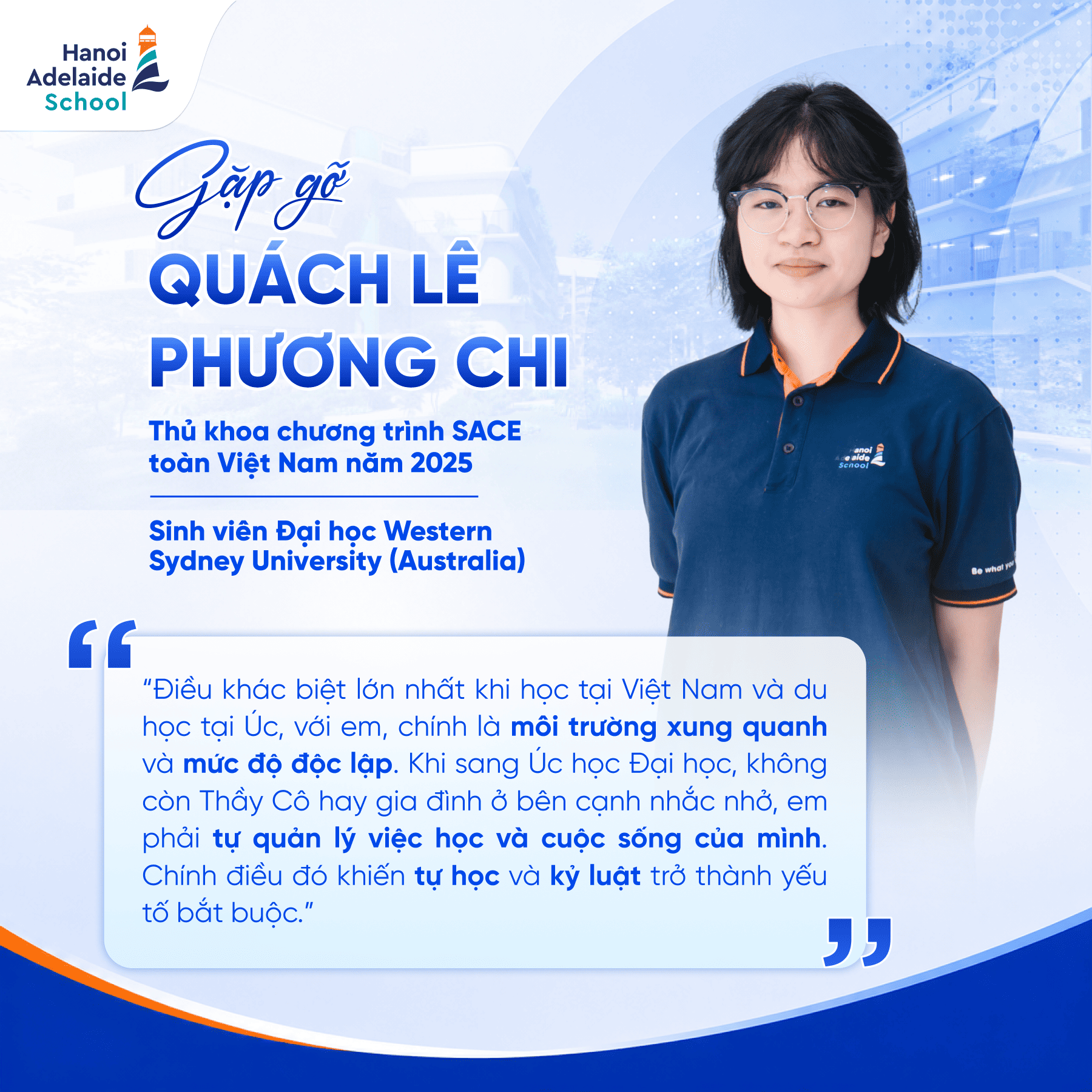
After nearly four months of studying at Western Sydney University (Australia), Quach Le Phuong Chi (Class 12I), Valedictorian of the Australian High School Program – Class of 2025 at Hanoi Adelaide School, has gained her first insights into the journey of becoming an international student.
Let’s join H.A.S in meeting Phuong Chi and hearing her reflections on adapting to a new academic environment, as well as the key skills that have helped her quickly settle into university life.
Q: Hi Phuong Chi, after your first four months as a university student in Australia, what has stood out to you as the biggest difference?
Phuong Chi: The biggest difference for me is the level of independence. When I was in high school, I always had close support from teachers, friends, and family. But at university, I have to take full responsibility for both my studies and my daily life.
My current schedule may seem less packed than before, but that doesn’t mean it’s easier. If you don’t manage your time well or lack discipline, it’s very easy to fall behind on deadlines and lose your academic rhythm.
Q: Did the change in learning approach cause you any difficulties at the beginning?
Phuong Chi: At first, yes, because I had to study much more independently than before. I couldn’t wait until class to learn new knowledge—I had to review course outlines and prepare materials in advance to keep up with the pace.
However, this wasn’t entirely unfamiliar to me. During my time in the Vietnamese–Australian High School Dual Program at H.A.S, I had already developed the habit of self-study, researching materials, and preparing content for my academic projects. So even though university comes with greater pressure, I was able to adapt relatively quickly.
Q: Were there times when self-study became overwhelming for you?
Phuong Chi: Yes, especially during periods when multiple deadlines came at once. There was a time around midterms when I received results that weren’t as good as I had expected, and I felt quite stressed.
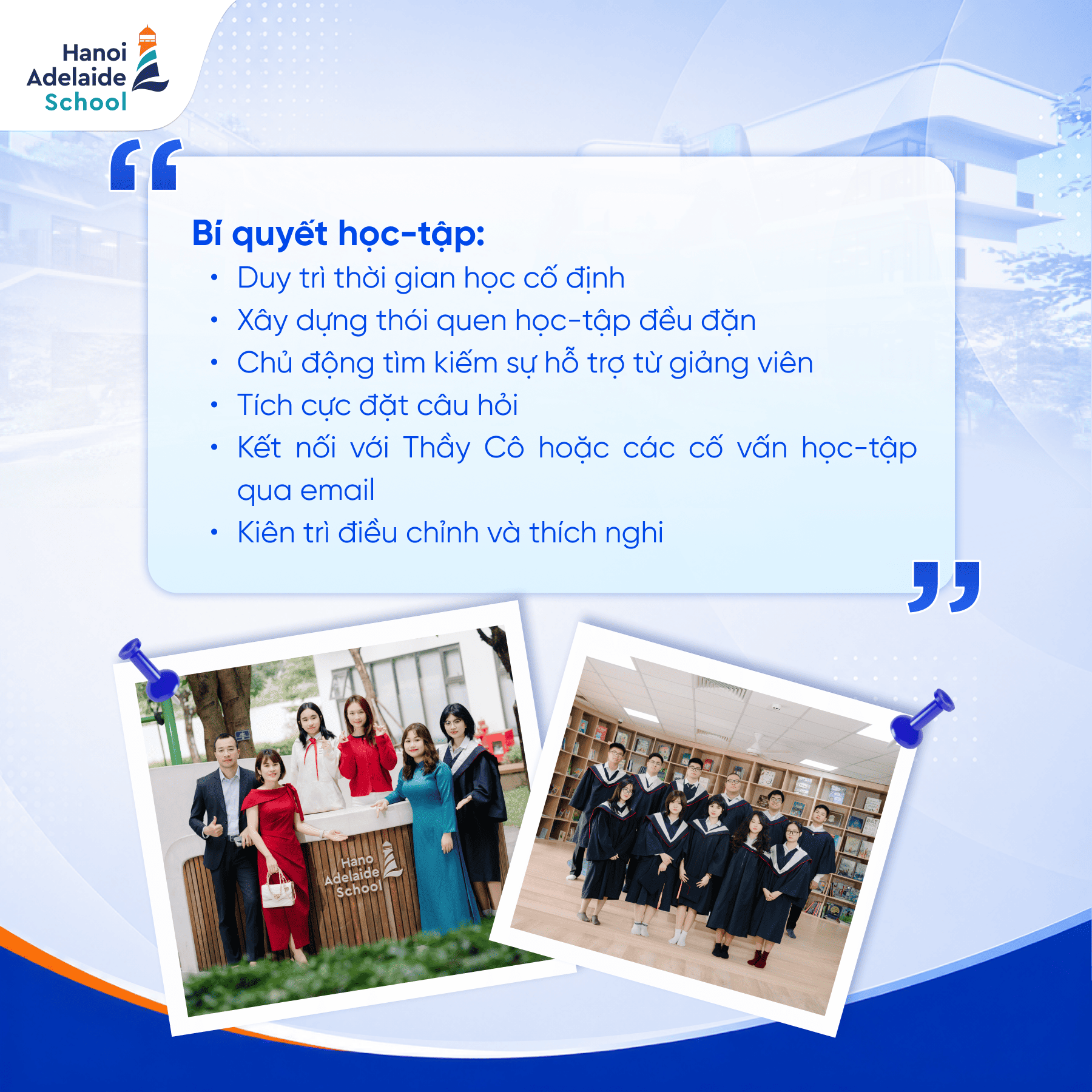
After that, I changed my approach. Instead of looking at a large workload all at once, I broke tasks down into smaller parts and allocated about two hours per subject. This helped me avoid feeling overwhelmed while still staying on track.
At the same time, I actively sought support from lecturers and academic advisors by asking questions during tutorials or reaching out via email. This allowed me to address problems promptly and avoid getting “stuck” on difficult topics for too long.
Q: In your opinion, how important are time management and self-study skills in an international university environment?
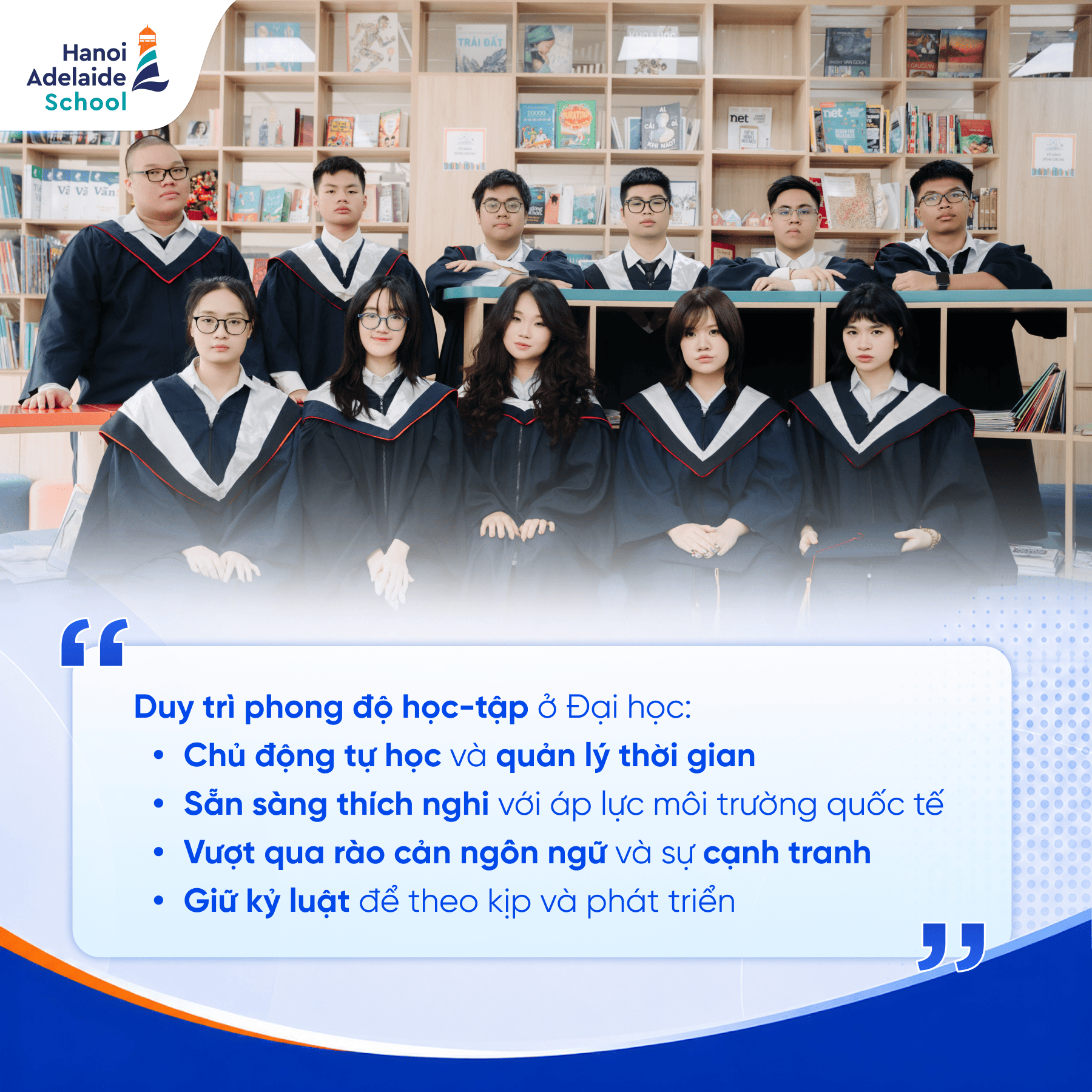
Phuong Chi: I believe these are decisive factors. At university, no one monitors your learning except yourself. If you fall behind, you are fully responsible for it—even to the point of having to retake a course.
In an international environment, the pressure is even greater. You have to study in English, adapt to new teaching methods, and compete with students from many different countries. That’s why effective time management gives you a valuable “buffer”—allowing you to understand lessons more deeply, prepare more thoroughly, and avoid being overwhelmed by deadlines.
As for self-study skills, they help you keep up with the pace of each class. Lecturers often don’t go into extensive detail during lectures; instead, they expect students to take the initiative to explore the material further on their own.
Q: Looking back on your journey, what has helped you adapt quickly to this new environment?
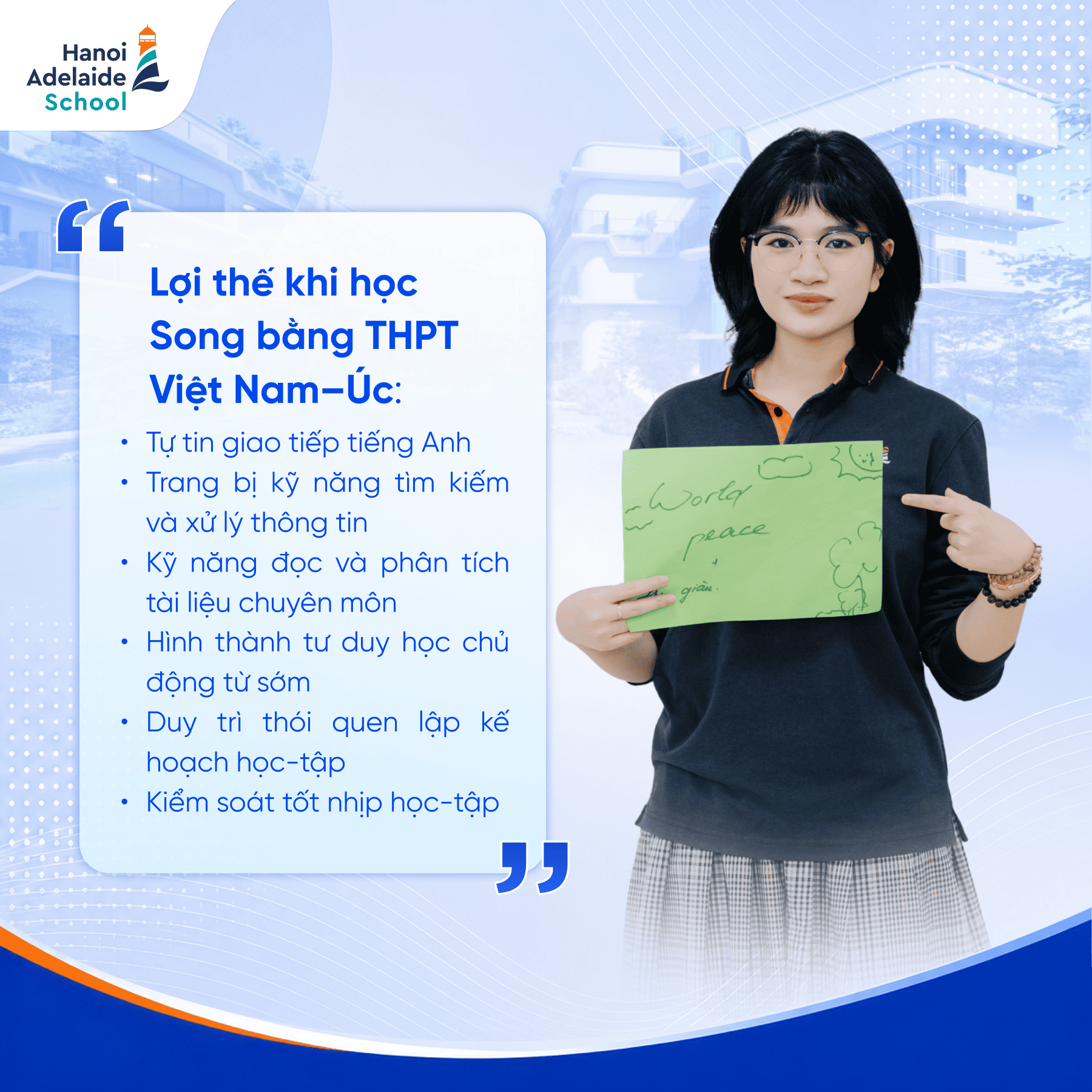
Phuong Chi: I think the foundation from the Dual Program helped me a lot. During my time at H.A.S, I became familiar with studying in English, developed a proactive learning approach, and learned how to plan my studies on a weekly basis.
I also built the habit of actively communicating with my teachers whenever I had questions. Because of that, when I entered university, I simply continued maintaining those habits. As a result, I didn’t experience any “culture shock” and was able to keep up with the academic pace right from the beginning.
HIGHLIGHTS OF THE 2026–2027 DUAL PROGRAM UPDATESWith the goal of helping students develop self-study and time management skills early on—two core competencies for success in an international environment—the Vietnam–Australia Dual High School Program (Global Stream) at Hanoi Adelaide School has been enhanced with several key updates for the 2026–2027 academic year: ✔ Expanded subject choices (up to 7 subjects): Greater flexibility to personalize learning pathways based on students’ strengths and goals Beyond academic outcomes, these improvements are designed to foster a proactive learning mindset from an early stage—empowering students to confidently adapt and thrive in international university environments. 👉 Learn more at: https://admissions.has.edu.vn/song-bang |
Hanoi Adelaide School
Pioneering Competency-Based Education in Vietnam