

How Little Questions Can Open Up New Perspectives
When asked which moment she would like to revisit, Ms. Van quickly chose the age of 18 – a time when she was preparing for university entrance exams and looking forward to an exciting student life. But the child followed up with another question: “If you want to go back to school, why don’t you go back to when you were six? Then you wouldn’t have to work, right?” Ms. Van was taken by surprise and burst into laughter. She had thought her answer was complete, but for the young student, there was still more to explore.
The question brought Ms. Van back to her own primary school years and prompted her to wonder: In the years to come, when H.A.S students look back on being six or seven years old, what will they remember most about their school days?
For her, this was a memorable milestone in her teaching journey. She realised that children’s curiosity and eagerness to ask questions deserve to be heard and encouraged by adults, rather than unintentionally interrupted with ready-made answers. Sometimes, all a child needs is someone who genuinely cares about what they think.
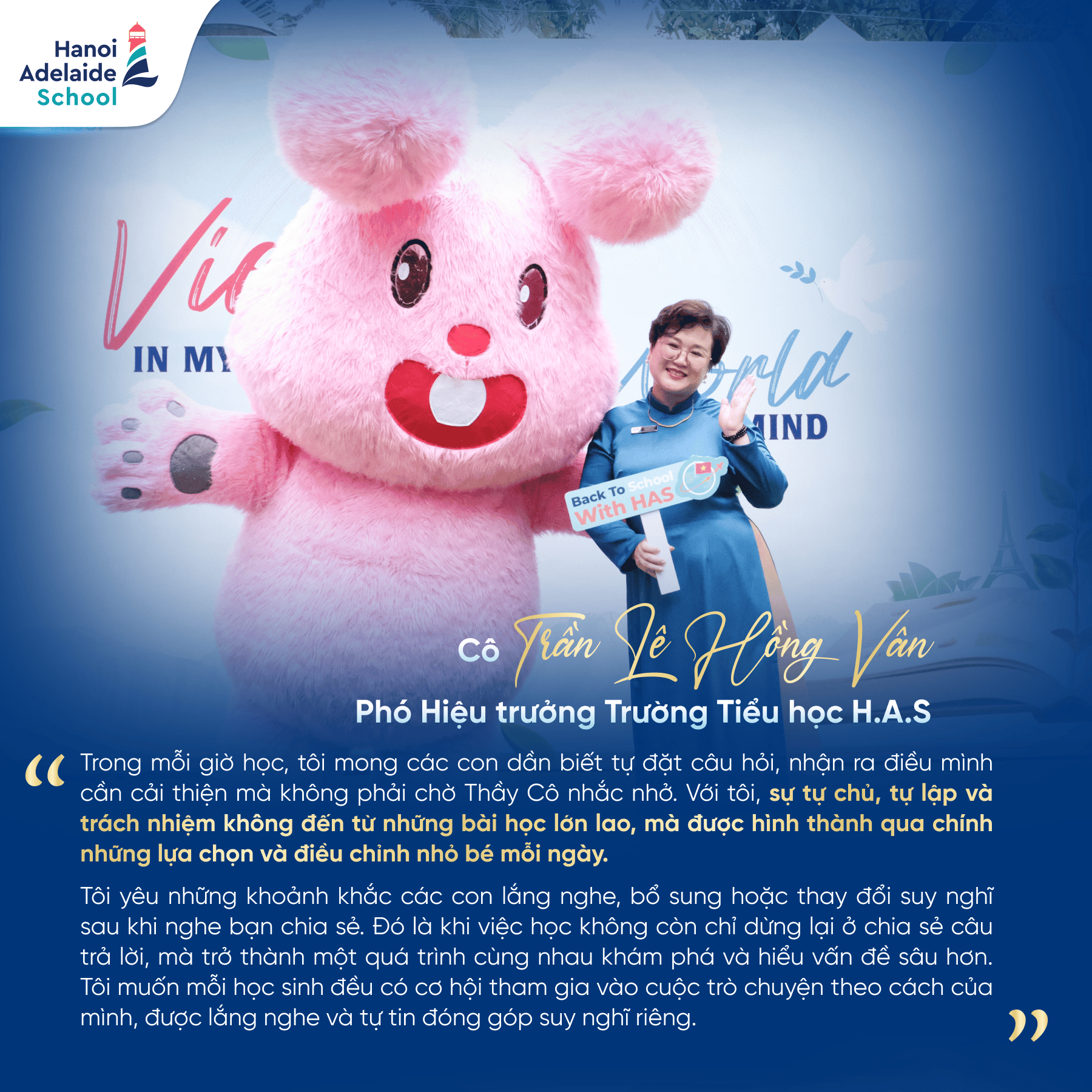
“Sometimes, all it takes is to pause for a moment, ask, ‘Why do you think that?’ and genuinely wait for the answer. I want children to grow up knowing that they can always ask more questions, even when the person answering is a teacher or a parent – people children often assume always have the right answers.”
This is also what makes Ms. Van love her work at H.A.S: the opportunity to see each student think in their own unique way, be surprised by their unexpected questions, and sometimes reconsider things that adults have long taken for granted.
Inspiring Critical Thinking Through Students’ Own Discoveries
Alongside her role as Vice Principal of H.A.S Primary School, Ms. Van is also a dedicated Vietnamese Language teacher. In every lesson, she makes room for students to reflect on what they learn and express their own perspectives. For example, when exploring a character in a story, rather than asking the whole class to give their opinions straight away, she usually guides students to reread the text, choose a particular detail, and discuss it with a classmate.
If a student describes a character as brave, she follows up with questions such as: “Which detail makes you think so?” or “Why do you think that?” Through these follow-up questions, students have the opportunity to find evidence to support their interpretations, listen to different perspectives, and reconsider their own thinking.
What she values is not simply whether students arrive at the correct answer, but also those moments when they are willing to change their perspectives after listening to a classmate. She shares: “I really enjoy watching students listen to one another and then add to or adjust their own ideas. That is when a discussion truly changes the way they understand a lesson.”
For students who need more time to express themselves, Ms. Van may suggest writing down a few keywords or practising their ideas with a classmate before sharing them with the whole class. In her view, every student has a different way of approaching learning, and teachers need to create opportunities for each child to find the most suitable way to express themselves.
Through these manageable activities, she hopes students will not only make progress academically but also gradually learn to reflect on their own learning, make adjustments, and take responsibility for their progress.
Dedication Begins with Understanding Each Student
According to Ms. Van, there are things teachers need to observe more closely than what is immediately visible. Two students who remain silent when asked a question may need entirely different forms of support: one may simply need more time to think, while the other already has an idea but does not know how to put it into words.
Therefore, rather than rushing to judge a student’s ability or attitude, teachers need to understand the reasons behind their responses and choose an appropriate way to guide them. Even words of encouragement should be specific enough to help children recognise what they have just accomplished, such as identifying their own mistake after rereading a question or adjusting the way they present an idea to make it easier for others to understand.
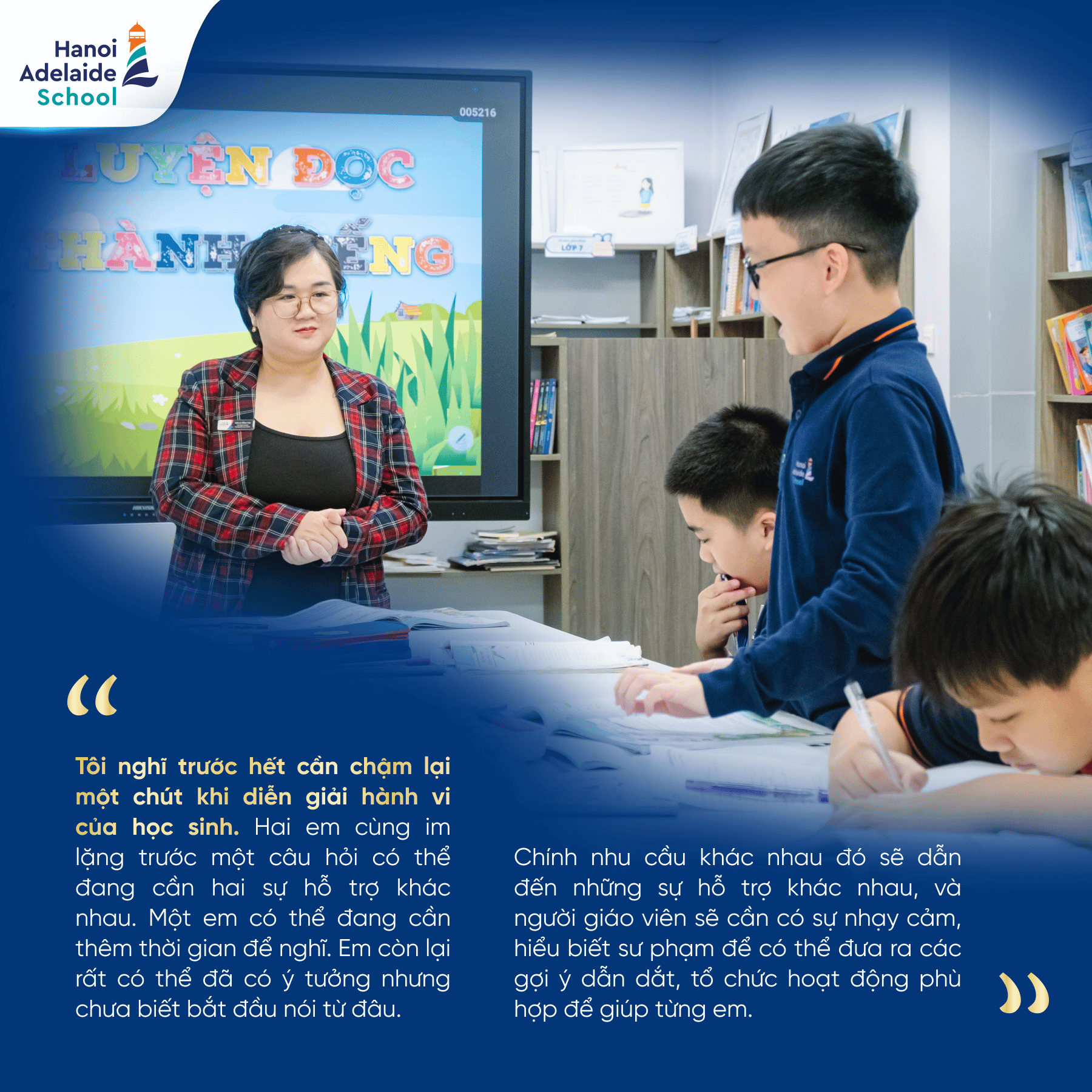
For Ms. Van, respecting students also means that adults should be willing to give children opportunities to do things independently when they are capable of doing so, even if teachers could complete those tasks more quickly themselves. This allows each student to make the most of their abilities, gain confidence in their own progress, and gradually become more independent.
This perspective also shapes how she understands a teacher’s dedication. It is not only about carefully preparing lessons or organising effective classroom activities, but also about patiently understanding the difficulties students encounter and being willing to adapt teaching approaches to support them better.
Learning from the Classroom Together with Colleagues
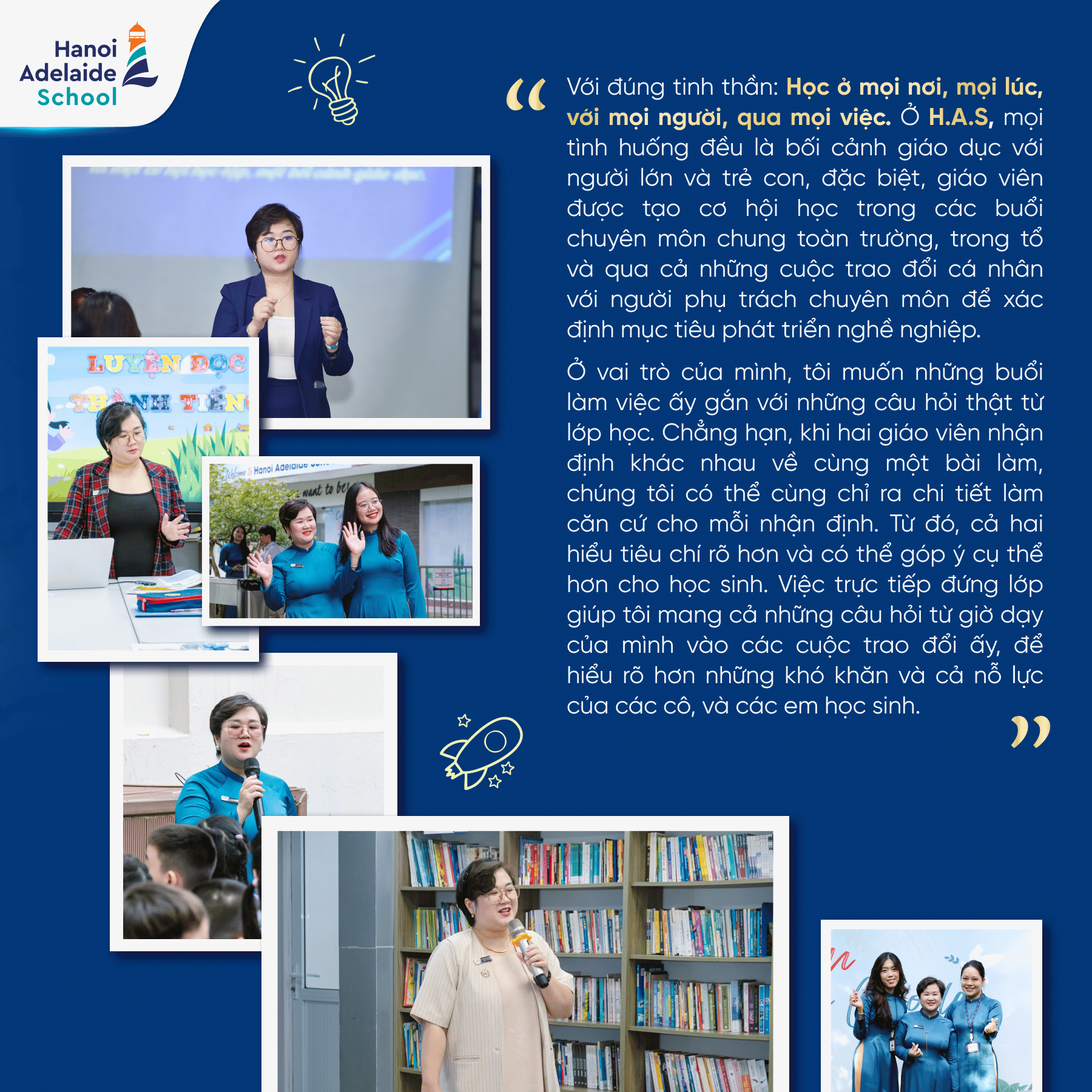
As both Vice Principal and a Vietnamese Language teacher, Ms. Van has the opportunity to observe educational practices from both a leadership perspective and within the classroom itself. What she particularly values are colleagues who are willing to bring students’ work to professional development meetings, share aspects they are still unsure about, and work together with fellow teachers to find answers.
At H.A.S, this spirit of continuous learning is fostered through whole-school professional development sessions, subject team meetings, and direct discussions with academic leaders. Rather than focusing solely on theory, Ms. Van hopes these discussions will always begin with real classroom situations. When two teachers have different interpretations of the same piece of student work, analysing the evidence together helps them gain a clearer understanding of assessment criteria and provide more specific feedback to students.
Teaching in the classroom herself also allows Ms. Van to bring questions arising from her own lessons into these discussions, while gaining a deeper understanding of the challenges her colleagues face. To her, teachers must also maintain a learning mindset, remaining open to reflecting on their own practices and exploring better ways to support students.
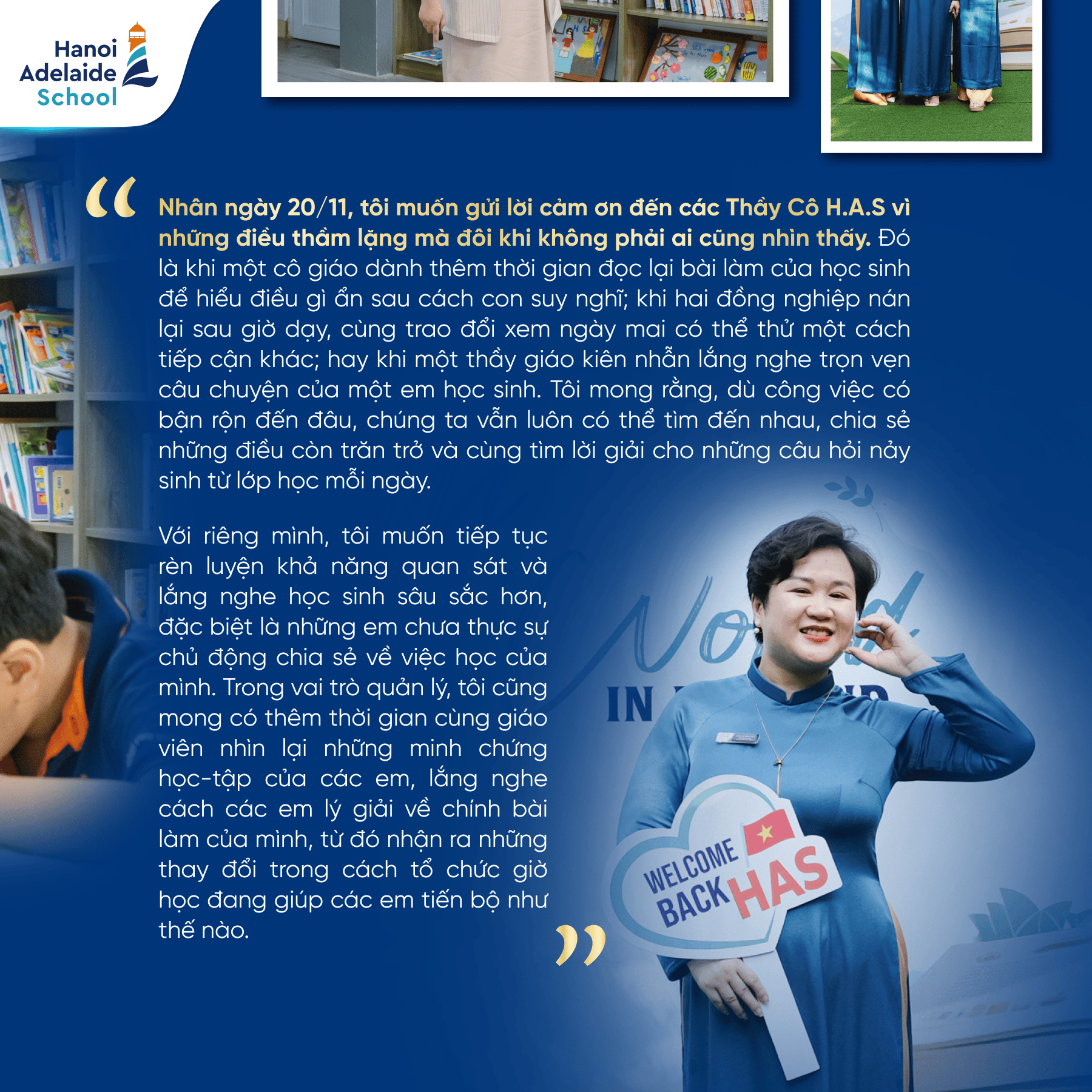
On the occasion of Vietnamese Teachers’ Day (November 20), Ms. Van would like to express her gratitude to all H.A.S teachers for their quiet yet meaningful contributions: from reviewing students’ work and exchanging ideas after lessons to patiently listening to the stories children share. She hopes that, no matter how busy their schedules may be, everyone will continue to turn to their colleagues to share concerns and work together to find solutions. As for herself, she hopes to further develop her ability to observe and listen to students, especially those who are less inclined to share their thoughts about learning, so that every child can enjoy a safe learning environment and grow with confidence.
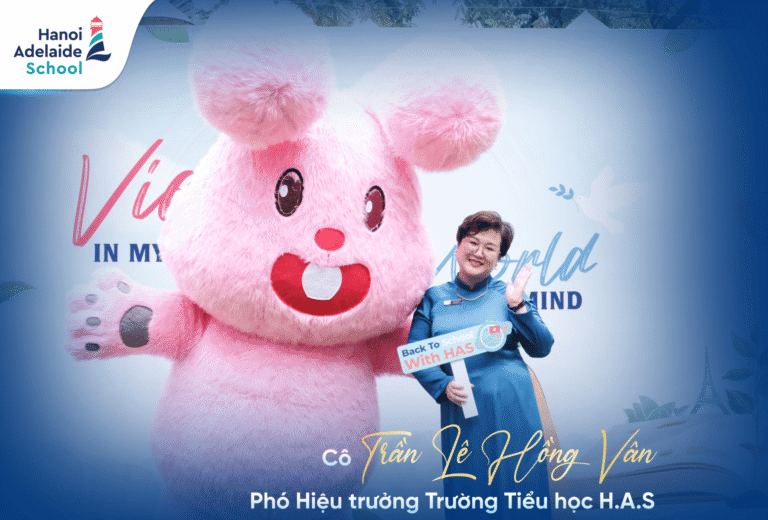
From an unexpected question asked by a student years ago to the reflections that shape her daily teaching and professional discussions today, Ms. Tran Le Hong Van’s journey continues to be guided by one consistent spirit: a willingness to listen, learn, and embrace change in order to better understand her students. Because teachers do not simply accompany children on their journey of growth; they also grow through that very journey.
Hanoi Adelaide School
Pioneering Competency-Based Education in Vietnam